
What Pokémon Teaches Us About Biodiversity
By Niamh Sponholz (Fordham Law ‘27)
From Pokémon’s Viridian Forest to Vanishing Habitats in Real Life
When Pokémon players first arrive at the Viridian Forest, they are submerged in a beautiful, lush forest full of life. Every patch of grass or tree is home to a Pokémon creature with a distinct role to play in the ecosystem: Bug-types maintain the forests, Water-types ensure the rivers and ocean thrive, Grass-types nurture the plants, and Rock and Ground types shape the terrain. Across the Pokémon world, there are biomes: deserts, mountains, deep oceans, coral reefs, tundras, wetlands, and even urban environments–all with species uniquely adapted to these conditions.
The Pokédex, a digital encyclopedia that records every species a trainer encounters, serves as a catalog of the world’s biological richness–much like how scientists document real ecosystems. Trainers (despite the controversy around Pokémon battling) are expected to care for their Pokémon and help them evolve by earning their trust.
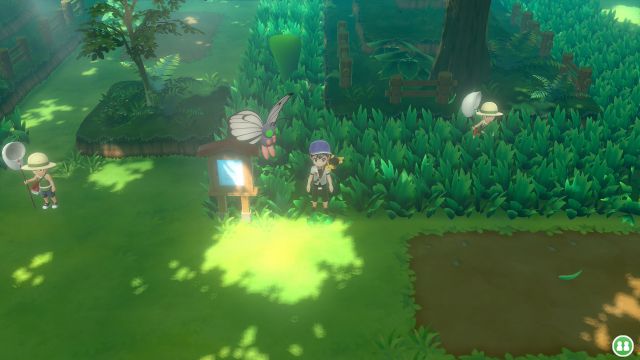
Biodiversity–or biological diversity–refers to the variety of life on earth at every level and includes the evolutionary, ecological, and cultural processes that sustain life. It encompasses all living things and is influenced by human communities. While the world of Pokémon is overflowing with biodiversity, our real world is losing it at an alarming rate–to the extent that many experts believe we are entering the sixth mass extinction. A mass extinction is when a high percentage of Earth’s biodiversity dies out in a relatively short period of geological time (thousands or even millions of years).
The planet has already experienced five mass extinction events, the last of which occurred about 65.5 million years ago when the dinosaurs were wiped out of existence. This extinction is driven by human activity, especially food production, which is responsible for 90% of global deforestation and 70% of our planet’s fresh water depletion. The forests, reefs, and wetlands that support our earth’s “Pokédex” of life are vanishing because of human activity.
Biodiversity Loss: The Real-World Pokédex Is Shrinking
The World Wildlife Fund’s 2024 Living Planet Report, which measured the change in population sizes of over 5,000 vertebrate species, revealed a frightening 73% decrease between 1970 and 2020. This decline reflects the broader pressures ecosystems face worldwide, as species struggle to survive in environments that are rapidly changing or disappearing altogether. Habitat loss–driven by agricultural expansion, deforestation, urban development, pollution, and climate change–is the leading threat to global biodiversity. Much of this destruction stems from our food system: industrial agriculture is the primary driver of deforestation and land conversion worldwide, shrinking wildlife populations and erasing the habitats they depend on.
Global conservation efforts aim to combat this rapid decline. In the United States, one of the most powerful legal tools for protecting biodiversity is the Endangered Species Act (ESA). The ESA is widely recognized as one of the strongest wildlife protection statutes in the world because it ensures that federal agency action does not harm any “threatened and endangered plants and animals and the habitats in which they are found.”
Biodiversity protection also depends on international cooperation. The Convention on International Trade in Endangered Species of Wild Fauna and Flora, for example, is a treaty that prohibits international trade that would threaten the survival of wild animals and plants. Another example of international collaboration is the Convention on Biological Diversity (CBD), which establishes a global framework for conserving ecosystems, sustainability, and equitably sharing the benefits of genetic resources. This convention encourages countries to create national biodiversity strategies and regularly report progress, but its commitments are largely non-binding and the CBD lacks strong enforcement mechanisms. According to the Global Diversity Outlook 5– Summary for Policymakers, most nations failed to meet the CBD’s 2020 biodiversity targets, citing major gaps in funding, capacity and governance. The United States also never ratified the CBD. As a result, major gaps in international biodiversity protection efforts persist.
From Corsola to Coral Bleaching
Even the Pokémon world has come to reflect real-world biodiversity loss. In the Sword and Shield generation of Pokémon, Corsola–a once cheerful and bright pink coral reef Pokémon–got a new form. Her “Galarian” form–a white, ghost-type Pokémon–was inspired by the real problem of coral bleaching, a devastating consequence of global climate change. Coral bleaching is what happens when warming oceans cause coral’s tissue to turn white.
This creative choice of the Pokémon creators, to give Corsola a new form, sadly underscores the truth that about half of the world’s coral reefs have already died. 90% of the world’s surviving reefs are expected to disappear by 2025. Coral reefs are home to more than 25% of marine life–the Pokémon equivalent of an entire region’s biodiversity.

Legal Battles for Endangered Ecosystems
Legal decisions can impact biodiversity protection. For example, in Weyerhaeuser Co. v. U.S. Fish & Wildlife Service (2018), the U.S. Supreme Court held that an area may only be designated a “critical habitat”–one that federal agencies cannot harm because it is essential to a species–under the ESA if the habitat is currently habitable. This decision narrowed the scope of habitat protections, which creates a serious challenge for species whose environments have been rendered inhabitable by climate change and thus require restoration. Yet, Weyerhaeuser prevents those areas from being designated as critical habitats.
Biodiversity protection has become a major political priority in the United States. The Biden Administration made efforts to conserve 30% of U.S. land and waters by 2030 through its “America the Beautiful” initiative, but state-level implementation has varied: definitions of what it means to “conserve” land and water vary significantly, funding is inconsistent, and some states have not yet developed baseline metrics or legislative frameworks needed to meet the target.
Pokémon’s Lesson: Balance and Stewardship
The beautiful universe of Pokémon reminds us of our role in the ecosystem: we must work with our environment. Trainers and Pokémon thrive through interdependence, not domination. Modern environmental law mirrors this principle by requiring federal agencies to evaluate environmental harms before acting, protect critical habitats, regulate pollution, and support ecosystem restoration–measures designed to balance human development with the health of natural systems.
The world we experience in our games is vibrant: alive with diversity and wonder. That world can still be our reality, but only if environmental law preserves it. If we want the next generation to inherit a world as beautiful as that of the Pokémon world, we need to protect the real habitats that still remain–before they fade into fiction.